LOGIC
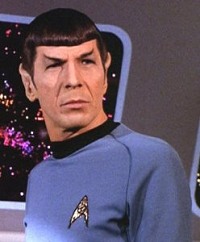
We hear about logic all the time. The character Spock in the Star Trek television series was from a race devoted to logic. When we look around us, it appears that logical people are able to know things other people cannot. But exactly what is logic, and is it everything we need in order to be successful in life?
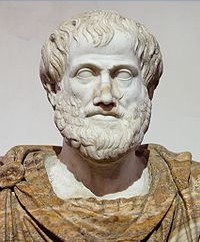
The ancient Greeks studied logic * . In fact, the word logic comes from a Greek word (logikos), and the Greek philospher Aristotle is known as the "Father of Logic". Logic is the area of philosophy that has to do with thinking or reasoning. We look at the world around us and see things. Using logic, we can often use the things we see to determine things we cannot see. For example, if you are sitting in your room in the evening and it becomes dark you can conclude that the sun has gone down. You don't have to look out the window to see the sun.
The ancient Greeks developed a kind of logic still used today called a syllogism * . A syllogism consists of two parts: the premise * and the conclusion. The premise is the fact or facts we know. In our example above, we saw that our room became dark. Looking at our watch we saw that it was in the evening. These are facts. There are usually several facts or premises in a syllogism. From these facts you can draw one or more conclusions.
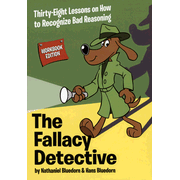
When we look at the facts and try to draw conclusions, we sometimes make a mistake. This is called a fallacy * . In order to avoid making mistakes, people study and classify fallacies. They give them funny names like "Red Herring" * , "Faulty Appeal to Authority", and "Circular Reasoning". Visit the Fallacy Detective site for a short list of fallacies. Learn to recognize fallacies and use this knowledge when other people are trying to convince you of something. You will be surprised how many fallacies you can find in the news, on television and in advertising.
What does it mean to "know" something? Sometimes we can be 100% sure our conclusion is true if the facts we base it on are true. Are we sure that our facts are true? Do we have all the facts? Most situations in life are not simple. We don't have all the facts. We have to guess and we cannot be 100% sure we are right. When we are 100% sure we are right, this is called "deduction" * . When we guess, this is called "induction" * . If we always had to be 100% sure, we could not make important decisions, so induction is a big part of life.
Did you ever meet a very smart person who made big mistakes? Logic is important, but it is not everything we need to be successful. Wisdom * is much more important than logic. Wisdom is knowing which questions to ask... which path to take... how to tell good from evil. Proverbs 3:5 says, "Trust in the LORD with all your heart and lean not on your own understanding." God gave us minds with which to think, but we must always remember that we are part of creation and our understanding is limited.
Online Logic Activities
Chess
Sudoku
Guess The Word
Tic Tac Toe
Leap Frog
Decanting Puzzle
Hexagons
Jigsaw Puzzle
From Word Central's Student Dictionary
by Merriam - Webster
(Pronunciation note: the schwa sound is shown by ə)
logic
Pronunciation: lahj'-ik
Function: noun
sound reasoning, connection (as of facts or events) in a way that seems reasonable
syllogism
Pronunciation:sil'- ə-jiz-əm
Function: noun
a brief form for stating an argument that consists of two statements
and a conclusion that must be true if these two statements are true
premise
Pronunciation: prem'-əs
Function: noun
a statement taken to be true and used as a basis for argument or reasoning
red herring
Function: noun
something intended to distract attention from the real problem
fallacy
Pronunciation: fal'-ə-sE
Function: noun
a false or mistaken idea or the quality or state of being false
deduction
Pronunciation: dih-dək-shən
Function: noun
the drawing of a conclusion by reasoning; especially : reasoning in which the conclusion
follows necessarily from a general rule or principle or
a conclusion reached by such reasoning
induction
Pronunciation: in-dək-shən
Function: noun
any form of reasoning in which the conclusion, though supported by the premises,
does not follow from them necessarily
wisdom
Pronunciation: wiz'-dəm
Function: noun
learning acquired over a period of time, ability to see beneath the surface of things,
good sense; and a wise attitude, belief, or course of action

Page Comments
Leave a Comment View all Comments
Most Recent Comments ( See more comments on this page ) 2011-02-02
I love that "Brothers and sisters riddle", but I was taught it this way: A man is looking at a picture of a young man, and he says: brothers and sisters I have none, but this man's father (indicating man in photo) is my father's son. Who is in the photograph?
This makes it a little more "visual", I suppose.
JennyMac2010-03-06
i don't think that sounds right about "brothers and sisters I have none. . ." love the site tho
donna